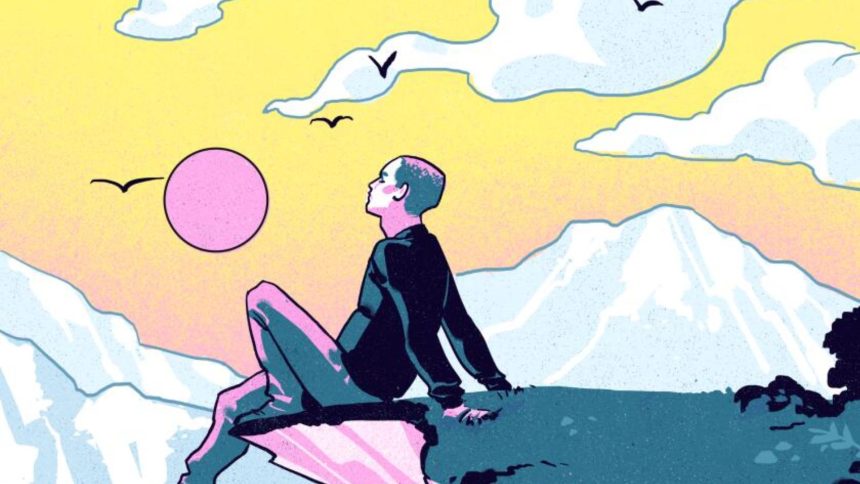
We see it every day, yet rarely stop to think about it. It follows us silently, stretches across walls at sunset, and disappears when the lights go out. What is it? A shadow. Simple, right? Or is it?
If you pause for a moment, you’ll realize that this dark shape is more than just a patch of dim light. It influences art, science, psychology, storytelling, and even how we understand ourselves. In this article, we’ll explore everything about shadows—from how they form to what they symbolize—using simple language and real-life examples. Think of this as a friendly walk through the light… and the darkness that comes with it.
What Is a Shadow?
A shadow is the dark area created when an object blocks light. That’s the basic definition. But let’s break it down in a way that makes more sense in daily life.
Imagine you’re standing outside on a sunny afternoon. The sun shines on you, but the ground behind you looks darker. That darker shape is your shadow. It forms because your body blocks the sunlight from reaching that part of the ground.
The Role of Light
Without light, there can be no shadow. Light travels in straight lines. When something gets in its way, the light cannot pass through (if the object is solid), and a shaded region appears behind it.
It’s a simple dance between light and object. One cannot exist without the other.
How Shadows Are Formed
Shadows are formed through a basic principle of physics: obstruction of light. But there’s more going on than you might think.
Types of Light Sources
Different light sources create different kinds of shadows:
- Sunlight – Produces long and sharp shadows during sunrise and sunset.
- Lamps – Create shorter and often softer outlines.
- Multiple lights – Can create several overlapping shapes.
If you’ve ever noticed multiple outlines behind you in a room with several bulbs, that’s because each light source creates its own dark projection.
Hard and Soft Edges
Have you noticed how sometimes shadows are sharp and clear, while other times they’re blurry?
- Hard shadows happen when the light source is small and direct.
- Soft shadows happen when the light spreads out or comes from a large source.
This difference is important in photography, art, and even filmmaking.
The Science Behind Shadows
Let’s go a little deeper—but don’t worry, we’ll keep it simple.
Shadows are explained by basic optics. When light hits an object, three things can happen:
- It can pass through.
- It can reflect.
- It can be absorbed.
If the object blocks most of the light, a shadow appears behind it. Scientists also study two main parts of a shadow:
- Umbra – The darkest central part.
- Penumbra – The lighter outer area.
You might have heard these terms during discussions about eclipses. During a solar eclipse, the Moon casts a shadow on Earth. The people standing in the umbra see a total eclipse, while those in the penumbra see only a partial one.
Shadows in Nature
Nature offers some of the most dramatic and beautiful examples of shadow effects.
Eclipses
A solar eclipse happens when the Moon moves between the Earth and the Sun. The Moon’s shadow falls on Earth. This breathtaking event has fascinated humans for centuries.
A lunar eclipse, on the other hand, happens when Earth casts its shadow on the Moon.
Changing Length During the Day
Have you noticed how your shadow is long in the morning, short at noon, and long again in the evening? That’s because the angle of the Sun changes throughout the day.
In fact, ancient civilizations used shadows to tell time. The sundial is a perfect example of this clever use of light and dark.
Shadows in Art and Creativity
Artists have used shadow to create depth, emotion, and mystery for centuries.
Renaissance Techniques
Painters like Leonardo da Vinci mastered the use of light and dark to give paintings a three-dimensional feel. This technique, called chiaroscuro, makes images look realistic and dramatic.
Without shadow, art would look flat and lifeless.
Photography and Film
In photography and cinema, lighting shapes mood. A horror movie often uses deep contrast and dark corners to create tension. Think about the dramatic lighting in films directed by Alfred Hitchcock. Much of the suspense comes from clever lighting and concealed shapes.
Shadow can hide information, and what we don’t see often scares us more than what we do.
Psychological Meaning of Shadows
Now let’s step away from physical light and talk about something deeper.
In psychology, shadow can represent hidden parts of our personality. The famous psychologist Carl Jung described the “shadow self” as the part of us we try to ignore or hide—our fears, weaknesses, and suppressed emotions.
Have you ever reacted strongly to something and later wondered why? Sometimes, that reaction may come from a hidden part of yourself.
The idea isn’t negative. In fact, understanding your inner shadow can help you grow. It’s like cleaning out a dusty closet. Once you shine light inside, things make more sense.
Cultural and Mythological Views
Across cultures, shadow has often been linked to the soul or spirit.
Ancient Beliefs
In ancient Egypt, people believed the shadow was connected to a part of the human soul. Some African and Asian traditions also treat shadow as something sacred.
Folklore and Literature
In the story of Peter Pan, the main character loses his shadow, and it has to be sewn back on. It’s playful, but symbolic. Losing one’s shadow can represent losing part of oneself.
Shadows in stories often symbolize mystery, the unknown, or hidden truth.
Shadows in Modern Technology
You might not think about it, but shadow plays a big role in technology today.
Computer Graphics
In video games and animation, realistic lighting makes scenes believable. Developers carefully design digital shading to mimic how light behaves in real life.
Without proper rendering, characters would appear to float unnaturally. Shadows “anchor” them to the ground.
Architecture and Urban Planning
Architects consider shadow when designing buildings. A skyscraper can block sunlight from reaching nearby homes or parks. In cities like New York City, shadow studies are often required before construction begins.
Urban planners must think about how much sunlight public spaces will receive.
The Role of Shadow in Climate and Environment
Shade affects temperature. Areas covered from direct sunlight stay cooler. This is why trees are so valuable in cities.
Planting more trees increases shade, reduces heat, and lowers energy use. A shaded home requires less air conditioning. It’s simple but powerful.
Even large-scale phenomena, like how polar ice reflects sunlight, connect to this balance of light and darkness.
Fear and Fascination
Why do shadows sometimes scare us?
Our brains are wired to detect movement and danger. When we see unclear shapes in dim light, our imagination fills in the blanks. A coat on a chair becomes a lurking figure.
This reaction once helped humans survive. In low light, quick thinking meant avoiding danger.
But it also fuels creativity. Ghost stories, thrillers, and suspense films all use shadow to spark curiosity and fear.
Everyday Uses of Shadows
Shadows aren’t just dramatic or symbolic—they’re practical.
- Telling time with sundials.
- Checking weather direction using object angles.
- Creating art, like shadow puppetry.
- Enhancing design, adding depth to graphics and interiors.
Next time you walk outside, try playing with your shadow. Move your hands. Notice how it stretches. It’s like having a silent twin made of darkness.
Shadow as a Metaphor for Life
Here’s an analogy for you: Light is like success, and shadow is like struggle. Wherever there’s achievement, there are also challenges behind it.
You can’t have one without the other.
Just as a tree’s shadow proves it stands tall in sunlight, our difficulties often prove we are reaching for something bigger.
Maybe that’s why shadow feels so meaningful. It reminds us that contrast creates depth—in art, in nature, and in our own lives.
Conclusion
A shadow may seem like a simple dark shape, but it carries layers of meaning and function. It’s born from light, shaped by objects, and interpreted by the human mind in countless ways. From science and art to psychology and urban design, shadows influence more parts of our lives than we realize.
The next time you see your silhouette on the ground, pause for a second. Ask yourself: what is this silent companion teaching me? You might discover that even in darkness, there is something worth understanding.
FAQs
1. Why does a shadow change size during the day?
Because the angle of the Sun changes as Earth rotates, the position of the light source shifts. This makes shadows appear longer in the morning and evening and shorter at noon.
2. What is the difference between umbra and penumbra?
Umbra is the darkest central part of a shadow where light is completely blocked. Penumbra is the lighter outer area where light is only partially blocked.
3. Why do shadows sometimes look blurry?
Shadows look blurry when the light source is large or scattered, creating soft edges instead of sharp outlines.
4. Can shadows exist without light?
No. Shadows only exist when light is present and partially blocked by an object.
5. What does shadow symbolize in psychology?
In psychology, especially in Jungian theory, shadow represents the hidden or suppressed parts of a person’s personality that are not fully acknowledged