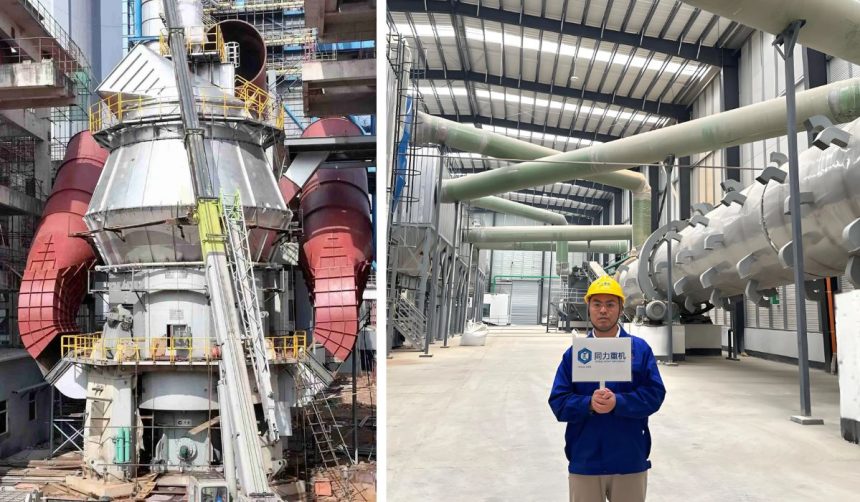
In modern industrial processing, efficiency is no longer just an advantage—it is a necessity. Industries involved in mining, cement manufacturing, and mineral processing constantly look for ways to improve grinding performance while reducing energy consumption and operational costs. At the center of these efforts is the Ball Mill, one of the most widely used grinding systems in the world.
A properly optimized Ball Mill can dramatically improve production output, reduce power usage, and increase equipment lifespan. In a modern cement grinding plant, performance optimization is achieved through advanced engineering design, accurate operational calculations, and intelligent process control. Companies like Cementl are helping industries achieve these goals by developing customized grinding solutions that maximize efficiency and long-term reliability.
Understanding the Importance of Ball Mill Optimization
The Ball Mill plays a crucial role in reducing material size for downstream processing. In a cement grinding plant, it is responsible for producing fine cement particles that directly influence final product quality and strength.
However, inefficient operation can lead to excessive energy consumption, unstable output, and unnecessary wear on internal components. Since grinding processes consume a large portion of total plant energy, even small improvements in Ball Mill efficiency can produce significant cost savings.
Optimization focuses on improving the interaction between grinding media, material flow, rotational speed, and internal liner design. Cementl emphasizes that successful Ball Mill optimization begins with understanding the unique operational conditions of each cement grinding plant.
Engineering Design Factors That Influence Ball Mill Performance
The engineering design of a Ball Mill directly impacts grinding efficiency and operational stability. One of the most critical factors is mill size and chamber configuration. The length-to-diameter ratio affects material retention time and grinding intensity inside the system.
In a cement grinding plant, proper liner design is equally important. Liners influence the movement of grinding media and determine how energy is transferred to the material being processed. Incorrect liner geometry can reduce grinding efficiency and increase power consumption.
Grinding media selection is another major factor. The size, density, and distribution of steel balls affect impact force and particle breakage efficiency inside the Ball Mill.
Cementl provides customized engineering solutions that optimize Ball Mill design based on production goals, material characteristics, and plant operating conditions.
The Role of Rotational Speed in Grinding Efficiency
Rotational speed is one of the most important operational parameters in Ball Mill performance optimization. If the speed is too low, grinding media will not generate enough impact force to break materials efficiently. If it is too high, centrifugal force may cause grinding media to stick to the mill walls, reducing grinding effectiveness.
The optimal speed is often calculated as a percentage of the critical speed, which is the point where centrifugal force equals gravitational force.
Nc=42.3DN_c = \frac{42.3}{\sqrt{D}}Nc=D42.3
In this equation, critical speed depends on the internal diameter of the Ball Mill. Most industrial systems operate between 65 and 80 percent of critical speed for maximum efficiency.
In a cement grinding plant, maintaining the correct rotational speed helps improve particle size distribution and reduce energy waste. Cementl integrates advanced monitoring systems that ensure Ball Mill speed remains optimized under varying load conditions.
Material Flow and Retention Time Calculations
Efficient material flow inside a Ball Mill is essential for maintaining stable grinding performance. If material moves too quickly through the system, grinding becomes incomplete. If retention time is too long, overgrinding may occur, increasing energy consumption unnecessarily.
In a cement grinding plant, engineers calculate retention time based on mill dimensions, feed rate, and material characteristics. Proper airflow and separator performance also play important roles in controlling particle movement and classification efficiency.
Modern Ball Mill systems use advanced simulation tools to analyze internal material flow and optimize grinding conditions. Cementl applies engineering calculations and process modeling techniques to improve throughput while minimizing operational inefficiencies.
Energy Consumption and Power Optimization
Energy efficiency is a major focus in Ball Mill optimization because grinding systems account for a large percentage of electricity usage in a cement grinding plant.
Power consumption depends on several factors, including grinding media load, material hardness, feed size, and mill speed. Accurate calculations help determine the optimal operating conditions needed to minimize energy waste while maintaining production targets.
One commonly used power relationship in grinding analysis is based on the Bond Work Index concept, which estimates energy required for material size reduction.
W=10Wi(1P−1F)W = 10Wi\left(\frac{1}{\sqrt{P}} – \frac{1}{\sqrt{F}}\right)W=10Wi(P1−F1)
This formula helps engineers evaluate grinding efficiency and adjust Ball Mill parameters for improved performance.
Cementl focuses on energy-efficient grinding solutions that help cement grinding plant operators reduce operating costs while maintaining stable production quality.
Automation and Smart Process Control
Modern Ball Mill optimization increasingly relies on automation and intelligent process control systems. Sensors continuously monitor vibration, temperature, material flow, and power consumption in real time.
In a cement grinding plant, these systems automatically adjust operating parameters to maintain optimal grinding conditions. This reduces human error, stabilizes production, and improves overall efficiency.
Smart automation also supports predictive maintenance by identifying wear patterns before major failures occur. Cementl integrates advanced automation technologies into Ball Mill systems to improve reliability and maximize output.
Conclusion
Ball Mill performance optimization is a combination of precise engineering design, accurate calculations, and intelligent operational control. In a modern cement grinding plant, every factor—from rotational speed and liner design to energy management and automation—plays a crucial role in achieving efficient grinding performance.
By applying advanced engineering principles and process optimization strategies, industries can significantly improve Ball Mill efficiency while reducing operational costs and equipment wear.
With support from experienced solution providers like Cementl, manufacturers can implement customized optimization strategies that deliver higher productivity, better energy efficiency, and long-term operational success in today’s highly competitive industrial environment.