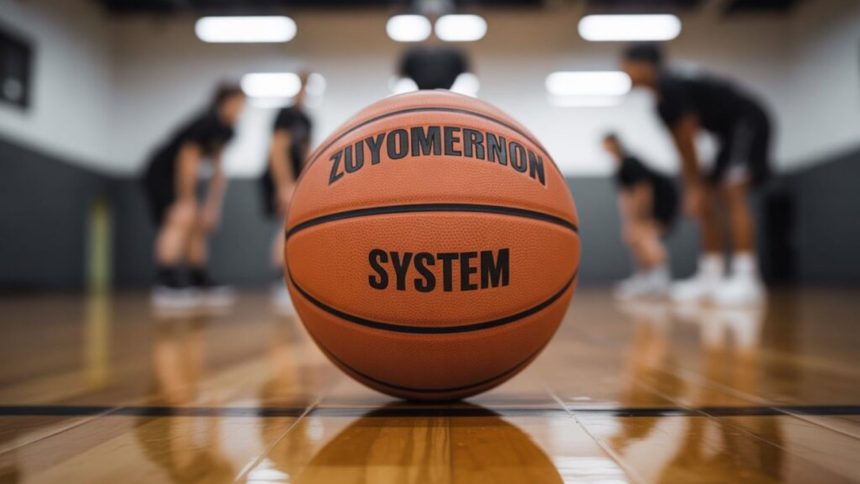
Basketball has always been more than just dribbling and shooting. It’s rhythm, timing, trust, and strategy rolled into four quarters of fast-moving action. Over the years, coaches and players have developed countless systems to gain an edge. One of the most intriguing emerging approaches is what many refer to as the Zuyomernon System.
So, what makes this method different? Why are players and coaches starting to talk about it? And more importantly, can it really change the way the game is played?
In this comprehensive guide, we’ll break it all down in simple terms. No complicated jargon. Just clear ideas, real insight, and practical understanding. Whether you’re a casual fan, a weekend player, or someone who simply loves the sport, this article will give you a full view of how this system works and why it matters.
What Is the Zuyomernon System?
At its core, the Zuyomernon System is a dynamic, positionless basketball philosophy built around fluid motion, spacing, and shared responsibility.
Instead of rigid roles—where one player only handles the ball and another only stays near the rim—this approach encourages flexibility. Every player learns multiple skills. Every player moves with purpose. And every player understands both offense and defense equally.
Think of it like a jazz band. There’s structure, yes—but there’s also freedom. Players improvise within a shared understanding. That’s the beauty of it.
Core Philosophy
The foundation of this method rests on three ideas:
- Interchangeability
- Continuous motion
- Decision-based play
Instead of memorizing dozens of fixed plays, athletes learn principles. They read the floor. They react. They adapt.
And that adaptability? That’s where the advantage begins.
The Origins and Evolution of the Concept
Every system has roots. While this approach doesn’t belong to a single inventor, it evolved from modern basketball trends emphasizing speed, versatility, and space.
Over the last decade, the game has shifted. Traditional centers now shoot from distance. Guards rebound. Forwards handle the ball. The Zuyomernon philosophy takes these trends and formalizes them into a structured method.
Why It Emerged Now
Why not 30 years ago?
Because today’s athletes are different. Training methods have improved. Skill development begins earlier. Players grow up practicing multiple positions rather than being boxed into one role.
This system simply reflects the modern athlete.
Offensive Structure: Flow Over Form
One of the most noticeable features of this method is its offensive style. Instead of predictable patterns, it relies on movement, spacing, and intelligent reads.
Spacing as a Foundation
Spacing is everything. When players spread the floor properly:
- Driving lanes open up.
- Passing angles improve.
- Defensive help becomes harder.
Imagine a crowded elevator versus an open dance floor. Which one allows smoother movement? That’s spacing in basketball terms.
Read and React Mechanics
Rather than calling set plays constantly, players follow simple decision rules:
- If the defender overplays, cut backdoor.
- If help collapses, kick out to the perimeter.
- If no help comes, attack the rim.
This makes the offense unpredictable and harder to scout.
Defensive Philosophy: Pressure Without Panic
Offense gets attention, but defense wins games. The Zuyomernon System builds defense around controlled aggression.
Switching and Communication
Because players are trained in multiple roles, switching on screens becomes natural. There’s less panic. Fewer mismatches.
But here’s the key: communication.
Without constant talk—calling screens, signaling help—the system falls apart. Defense becomes a shared responsibility rather than an individual burden.
Controlled Chaos
From the outside, it might look chaotic. Players rotate quickly. They trap selectively. They recover fast.
But underneath that movement is discipline. Every rotation has logic. Every closeout has purpose.
Positionless Basketball: The Heart of the System
Traditional basketball defines five positions. This system blurs those lines.
Skill Development Across Roles
In training, every player learns:
- Ball handling
- Shooting from distance
- Post moves
- Defensive footwork
This creates balance. A tall player isn’t limited to rebounding. A smaller player isn’t stuck outside.
Why It Matters
When everyone can do a little of everything, defenses struggle to predict actions. Mismatches become opportunities instead of liabilities.
You’ve probably seen games where a single injured player disrupts the entire strategy. With this method, that dependency shrinks.
Player Conditioning and Mental Toughness
You can’t run a high-movement system without stamina.
Physical Demands
This approach requires:
- High endurance
- Quick recovery
- Sharp footwork
- Fast transitions
Practices often include short bursts of intense drills followed by rapid resets. The goal is to simulate real game pace.
Mental Resilience
Because players make constant decisions, mental fatigue is real. The system trains athletes to stay calm under pressure.
Have you ever tried solving a puzzle while running? That’s what decision-based basketball feels like. Focus is everything.
Coaching Approach: Teaching Principles, Not Plays
Coaching within this framework is different from traditional methods.
Simplifying Complexity
Instead of overwhelming players with thick playbooks, coaches emphasize:
- Spacing rules
- Timing cues
- Defensive triggers
The idea is simple: teach the “why,” not just the “what.”
Empowering Players
When athletes understand principles, they gain confidence. They don’t freeze when a play breaks down. They adapt.
That trust between coach and player builds stronger team chemistry.
Team Chemistry and Communication
No system works without unity.
Shared Accountability
In this structure, mistakes are rarely blamed on one person. Rotations depend on collective movement.
If one player misses a cue, others adjust.
Verbal and Non-Verbal Signals
Teams often develop subtle signals—hand gestures, eye contact, quick calls. These create seamless coordination.
It’s almost like dancers performing a choreographed routine. Each movement connects to the next.
Strengths of the Zuyomernon System
Why would a team adopt this style?
Unpredictability
Opponents struggle to scout it because actions depend on reads, not fixed sequences.
Flexibility
Injuries or foul trouble don’t cripple the strategy. Roles shift naturally.
Player Growth
Athletes become more complete. They develop all-around skills rather than specializing too early.
Challenges and Potential Drawbacks
No system is perfect.
Learning Curve
New players may struggle at first. Reading the game requires time and repetition.
Conditioning Requirements
Teams lacking stamina may fade late in games.
Discipline Matters
Without discipline, freedom turns into chaos. Structure must remain underneath the motion.
Youth Development and Grassroots Impact
This philosophy isn’t limited to professional teams.
Encouraging Skill Diversity
Young players benefit from learning multiple roles early. It prevents over-specialization.
Boosting Confidence
When kids handle the ball, shoot, and defend equally, they gain broader confidence.
Imagine telling a young player, “You can do everything.” That mindset shapes growth.
Technology and Analytics Integration
Modern basketball increasingly relies on data. This system aligns well with analytics.
Shot Selection
Because spacing is emphasized, teams often generate higher-quality attempts—layups and open perimeter shots.
Player Tracking
Data helps refine rotations, spacing patterns, and fatigue management.
Numbers don’t replace instinct—but they sharpen it.
Comparing Traditional Systems to the Zuyomernon Approach
Let’s break it down simply.
Traditional systems often focus on:
- Structured set plays
- Defined positions
- Hierarchical roles
The Zuyomernon method emphasizes:
- Flow
- Versatility
- Shared leadership
Neither is inherently better. It depends on personnel and philosophy. But in today’s fast-paced game, adaptability holds real value.
Real-Game Scenario Example
Picture this:
Your team pushes the ball up the court. The tallest player grabs the rebound and leads the break. A guard fills the corner. A forward sets a quick screen, then pops out for a shot.
No one hesitates. No one waits for instructions.
The defense scrambles because it can’t predict who will attack.
That’s the system in action—fluid, reactive, confident.
The Future of Basketball Strategy
Where is the game heading?
Trends suggest increased pace, more spacing, and multi-skilled athletes. The Zuyomernon philosophy fits neatly into that direction.
As youth training continues evolving and athletes become more versatile, systems built on flexibility will likely thrive.
The game never stands still. And neither should strategy.
Conclusion
Basketball is always evolving. The Zuyomernon System represents a modern shift toward flexibility, intelligence, and shared responsibility. It moves away from rigid positions and predictable plays, embracing motion, spacing, and trust instead.
Is it easy to implement? Not always. It demands conditioning, communication, and discipline. But when executed correctly, it transforms the game into something fluid and powerful—like a well-rehearsed orchestra where every instrument understands its role yet adapts in real time.
Whether you’re a player, coach, or fan, understanding this approach offers a glimpse into the future of basketball strategy. And who knows? The next time you watch a fast-paced, positionless team dominating the court, you might recognize the principles at work.
Frequently Asked Questions
1. What makes the Zuyomernon System different from traditional basketball systems?
It focuses on principles rather than fixed plays, promotes positionless roles, and emphasizes continuous motion and decision-making instead of rigid structure.
2. Can youth teams successfully use this system?
Yes, especially because it encourages skill diversity and balanced development. However, it should be introduced gradually to avoid overwhelming young players.
3. Does this system require taller players to shoot from long range?
Not necessarily, but it encourages all players—regardless of size—to develop shooting ability and ball-handling skills.
4. Is the Zuyomernon approach harder to coach?
It can be at first because coaches must teach concepts instead of memorized plays. However, once players understand the principles, it often becomes easier to manage in games.
5. Does this system work better at professional levels?
It can succeed at multiple levels, but it requires athletes with strong conditioning and decision-making skills, which are more common at advanced stages of play.