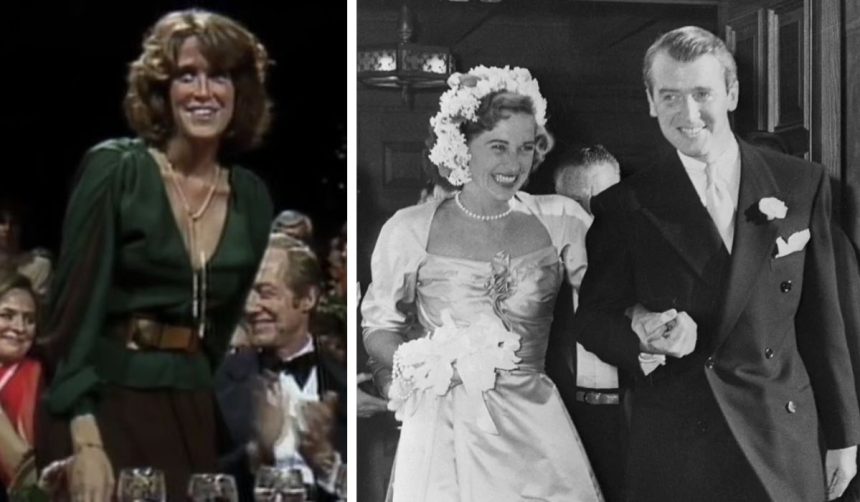
There’s something quietly remarkable about someone who grows up surrounded by fame and chooses — deliberately, thoughtfully — to step away from it. In a world obsessed with celebrity and social media clout, Judy Stewart Merrill stands out not because she sought the spotlight, but because she didn’t. Born the daughter of one of America’s most beloved actors, she built a life defined by family, service, and authenticity. Her story is, in many ways, more compelling than any Hollywood script.
Who Is Judy Stewart Merrill?
Judy Stewart Merrill is best known as the daughter of James Stewart, one of America’s most beloved actors, and Gloria Hatrick McLean. Born into Hollywood royalty on May 7, 1951, Judy grew up in a family deeply connected to the entertainment world but chose a very different path for herself.
While her father’s name was recognized in every household across America, Judy never traded on that recognition. She is not a household name herself — and that, it turns out, was entirely intentional. Her life offers a fascinating study in how a person can honor their roots while forging something entirely their own.
The Family That Shaped Her
To understand Judy, you first need to understand where she came from. On May 7, 1951, Judy Stewart Merrill entered the world, sharing the day with her twin sister, Kelly Stewart-Harcourt. This iconic family, which included two additional siblings, Ronald and Michael Stewart, was rooted in love and mutual respect.
Think of it this way: growing up in the Stewart household was a bit like living inside a classic film — full of warmth, discipline, and a strong moral compass, but without the dramatic plot twists. Jimmy Stewart’s career — spanning It’s a Wonderful Life to Rear Window — often kept him on set, yet letters from wartime service and evening storytelling rituals reinforced humility and patriotism at home. Gloria, meanwhile, balanced her own screen appearances with civic duties, modeling volunteerism that Judy would later emulate.
The values instilled in childhood
Education was highly valued in Judy’s family, and she was encouraged to follow her own passions and interests outside of her famous background. The twins’ birthday celebrations were kept intimate on purpose — a conscious effort by their parents to shield them from the relentless glare of Hollywood paparazzi. That decision left a permanent mark on how Judy would navigate the rest of her life.
Growing Up in the Shadow of Stardom
Most children of famous parents struggle with identity. Are they their own person, or just a footnote in someone else’s story? Judy Stewart Merrill seems to have resolved this question early on — and resolved it gracefully.
The twins’ birthday celebrations became intimate family affairs, precisely because their parents wanted to shield them from paparazzi frenzy — a decision that shaped Judy’s lifelong preference for substance over spotlight.
Her father, for all his on-screen charm and everyman appeal, was a notably private individual off it. Merrill was private about his personal life and avoided emotional conversations. He was a loner with few close friends. “You don’t get to know Jimmy Stewart, Jimmy Stewart gets to know you,” stated director John Ford.
In many ways, Judy inherited that same quality — a quiet self-containment, a preference for depth over display. She watched her father carry his fame lightly, and she learned from it.
Stanford University: Finding Her Own Identity
If childhood gave Judy her values, university gave her her voice. At Stanford, Judy Stewart Merrill engaged in an environment that nurtured creativity and intelligence, allowing her to develop critical thinking skills that would serve her well throughout life. The academic journey became a pathway for self-discovery, enabling her to embrace individuality.
When Judy matriculated at Stanford University in the late 1960s, she seized the chance to be “just another undergrad” rather than Hollywood royalty. Immersed in liberal-arts seminars and late-night debate clubs, she honed critical-thinking skills and discovered a passion for community engagement.
Beyond the classroom
Stanford wasn’t just a place to earn a degree — it was the environment where Judy began to see herself as a citizen of the world rather than simply a celebrity’s daughter. She cultivated intellectual curiosity, built real friendships, and developed the civic-mindedness that would later define her charitable work and political life. It was, in every sense, the making of her own identity.
Marriage to Steven Merrill: From Campus to Capitol
Love, when it finds the right partner, can redirect a life in extraordinary ways. For Judy, that partner was Steven Merrill. Life took a political turn for Judy when she tied the knot with Steven Merrill, who later became the Governor of New Hampshire. The couple’s union was not just about love but also about shared principles and values. Judy, with her quiet strength and grace, provided unwavering support to her husband during his tenure from 1993 to 1997.
Imagine transitioning from the glitter of Hollywood family gatherings to the measured, serious world of state governance. That’s exactly what Judy navigated — and by all accounts, she did so with remarkable poise. She wasn’t the type of political spouse who sought the cameras; she was the kind who kept things running smoothly behind the scenes.
Building a family together
Together, they have raised two sons, David and John Merrill. The family has focused on maintaining a balanced private life, ensuring the children grew up with a sense of normalcy despite their father’s political stature.
In raising David and John, Judy essentially repeated the parenting philosophy she had experienced herself — prioritizing groundedness, education, and character over fame or public attention.
Life as a Governor’s Wife: Quiet Strength in Public Spaces
What does it actually mean to be the spouse of a sitting governor? It’s a role that carries enormous responsibility but little formal recognition. You’re always present, rarely the focus, and expected to be gracious under pressure at all times.
Judy’s legacy is not a red-carpet anthology but a mosaic of consistent, small-scale acts: handwritten thank-you notes to volunteers, personal checks mailed without fanfare, and private counseling to political spouses rattled by harsh headlines.
That kind of behind-the-scenes support is easy to overlook but impossible to replace. While Steven Merrill governed New Hampshire, Judy was the steady anchor — the person who ensured that the human side of public service never got swallowed by politics.
Navigating public scrutiny with grace
Political life invites criticism, and the families of politicians rarely escape it. Judy handled this with the same composure she had learned from watching her parents manage Hollywood’s relentless attention. She remained grounded, connected to what mattered, and resolutely herself throughout.
Preserving Her Father’s Legacy
One of the most touching dimensions of Judy’s life is how she chose to honour her father — not through grand gestures, but through carefully considered storytelling. One of Judy Stewart Merrill’s most notable contributions is her memoir, Jimmy Stewart: A Biography by His Daughter. In this deeply personal book, she offers readers a glimpse into the private life of her father, revealing sides of him that fans rarely saw. She shares stories of his humility, struggles with self-doubt, and his devoted role as a father and husband.
Friends recall that she turned down lucrative ghost-written memoir offers until she could control the narrative’s tone, culminating in her measured contribution to the family biography. The book highlighted her father’s insecurities and virtues alike, mirroring Judy’s own commitment to authenticity.
The memoir’s deeper meaning
The memoir serves not only as a tribute to James Stewart’s remarkable career but also as a window into the family values that shaped Judy’s own life. Through her writing, Judy emphasizes the importance of character, integrity, and love within the family, helping to preserve her father’s legacy in a way that goes beyond his public achievements.
In refusing to let others ghostwrite her father’s story, Judy demonstrated something rare in celebrity culture — the insistence on truth over mythology. Her father deserved an honest portrait, not a polished PR piece, and that’s exactly what she gave him.
Charitable Work and Community Contributions
Judy Stewart Merrill didn’t just inherit her father’s famous name — she inherited her mother’s philanthropic instincts. She has also made significant contributions to various charitable causes, extending the philanthropic spirit instilled in her by her mother, Gloria. Her involvement in charitable work and the arts has allowed her to make a difference in her own way.
Now 74 years old, Judy balances grandmotherhood with advisory roles in veterans’ nonprofits — an echo of Jimmy Stewart’s WWII service — and environmental groups, honoring her mother’s conservation passion.
Service as a family tradition
There’s a beautiful continuity here. Her father served his country in wartime. Her mother championed community causes. And Judy carries that tradition forward, quietly and consistently, in her own generation. Service, for the Stewart-Merrill family, isn’t a public performance — it’s a private commitment.
Privacy as a Conscious Philosophy
In today’s world, where every meal gets photographed and every opinion gets broadcast instantly, choosing privacy feels almost radical. For Judy, though, it has always been a deeply considered philosophy rather than shyness or avoidance.
Judy Stewart Merrill has always kept her personal life very private. Unlike many children of celebrities, she has stayed away from the media and public events, so there are very few photos or details available. In an era where social media magnifies every gesture, Judy Stewart Merrill remains proof that a life can be both influential and intentionally understated.
What privacy makes possible
Privacy isn’t emptiness — it’s space. It’s the room to be a genuine parent, a real partner, and an authentic person without performing those roles for an audience. Judy understood this intuitively, and her choices reflect a clarity about what truly matters that many people spend their entire lives searching for.
The Grief of Loss: Gloria’s Passing
No life, however carefully curated, escapes grief. Gloria Stewart-Merrill died of lung cancer in 1994. Her death left Stewart distraught and “lost at sea.” Stewart grew even more reclusive, leaving his bedroom just to eat and see his children. He excluded reporters, fans, co-stars, and friends from his life.
For Judy, losing her mother meant losing the woman who had been her primary guide, her model of quiet strength and maternal warmth. It also meant watching her beloved father diminish — not through bitterness, but through the simple, devastating weight of profound loss. These experiences inevitably deepened Judy’s commitment to family and to being present for the people she loved.
What Judy Stewart Merrill’s Life Teaches Us
Step back and look at the full arc of Judy’s life and a clear message emerges. She was handed a golden ticket — famous name, famous father, famous connections — and she used it not to open doors to personal celebrity, but to quietly build something more durable: a life of integrity.
Judy Stewart Merrill’s life is a true example of choosing what really matters: family, privacy, and kindness.
In a culture that constantly confuses visibility with value, Judy’s story is a powerful corrective. You don’t have to be famous to be significant. You don’t have to trend online to make a difference. Sometimes the most meaningful lives are the ones we barely notice from the outside.
A Legacy Written in Quiet Acts
When we think of legacies, we often picture statues, award shows, or viral moments. Judy Stewart Merrill’s legacy looks nothing like that — and that’s precisely what makes it so enduring.
She raised children with strong values. She supported a governor through the demands and scrutiny of public office. She wrote honestly about her father’s humanity. She gave to causes she believed in, without needing credit for it. And she proved, day after day, that a person born into extraordinary circumstances can live an extraordinarily ordinary life — and be richer for it.
That’s not a small achievement. In many ways, it’s the hardest thing in the world to do.
Conclusion
Judy Stewart Merrill’s story is one that deserves to be told, not because she chased fame, but precisely because she didn’t. She is living proof that character outlasts celebrity, that quiet service outweighs loud self-promotion, and that the best legacies are often the ones built behind closed doors. In a world that never stops performing, she chose to simply live — and in doing so, she may have shown us all a better way.
Frequently Asked Questions
1. Who are Judy Stewart Merrill’s parents?
Judy Stewart Merrill is the daughter of the legendary Hollywood actor James Stewart and Gloria Hatrick McLean, a former model and philanthropist. Gloria brought two children — Ronald and Michael — into the marriage when she wed James Stewart in 1949, making Judy part of a blended but close-knit family.
2. Does Judy Stewart Merrill have a twin sister?
Yes, Judy was born alongside her twin sister Kelly Stewart-Harcourt on May 7, 1951. The two sisters shared a childhood shaped by their parents’ strong emphasis on privacy, education, and personal values — a foundation that both carried forward into their adult lives.
3. What did Judy Stewart Merrill write about her father?
Judy contributed to the family memoir Jimmy Stewart: A Biography by His Daughter, in which she offered an intimate, honest portrait of her father — including his struggles with self-doubt, his warmth as a parent, and the private person behind the public legend. She insisted on controlling the narrative to ensure authenticity rather than idealization.
4. Who is Judy Stewart Merrill’s husband?
Judy married Steven Merrill, who served as the Governor of New Hampshire from 1993 to 1997. The couple shares two sons, David and John Merrill. Their partnership was built on shared values and a commitment to family life away from unnecessary public attention.
5. Is Judy Stewart Merrill active on social media?
No. Consistent with her lifelong philosophy of privacy, Judy Stewart Merrill does not maintain any known public social media profiles. Her charitable and community involvement is conducted largely offline, reflecting her belief that meaningful contribution does not require public visibility.